
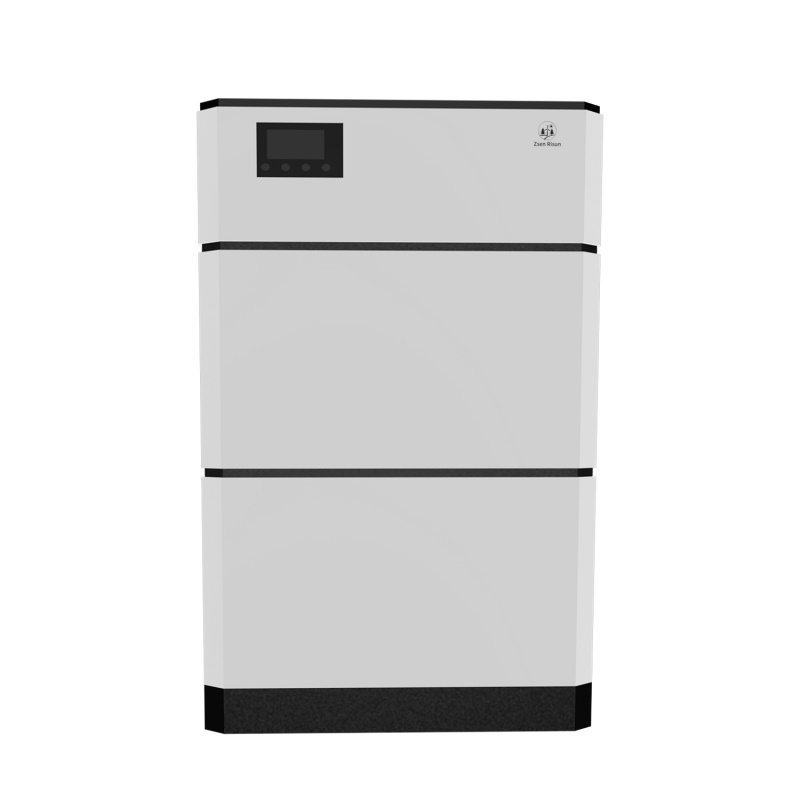
Choose The Right Cell Chemistry
The first and most important thing when selecting lithium ion batteries is to identify the correct cell chemistry. For the purpose of solar energy storage, Lithium Iron Phosphate (LiFePo4) is more suited compared to others. Industry data from the China Chemical and Physical Power Industry Association indicates that the cycle life of LiFePo4 batteries is between 3000 and 10000 times, which is much more than that of ternary lithium and lead-acid batteries. From my experience, I recall a case where a residential project used LiFePo4 batteries for 8 years and the batteries were still at 80% capacity, while a ternary lithium setup for a small shop had to be replaced after 3 years. LiFePo4 batteries are non-toxic and contain no heavy metals. Furthermore, they pose a much lower risk of thermal runaway, which makes them the best and safest option for commercial grade batteries, as well as residential. While other cell chemistries may have higher energy density, they do not have the stability and longevity that energy storage applications require.
Analyze the Operational Metrics
Cycle life is the most important metric for lithium ion batteries, and is the most important metric for measuring performance for batteries. Differentiate just the number and the explanation: a cycle is a charge and discharge, and a battery is at its end of life when its capacity drops to 80% For most homes, 6000 cycles is a good estimate and means the battery will be used for 15+ years and will be charged daily. Other important metrics are capacity and energy density, a 5.12kWh 51.2V 100Ah LiFePo4 battery will be sufficient for a home, while high capacity stacked systems are needed for commercial applications like the one I suggested to a customer restaurant battery upgrade from low cycle to 8000 cycle LiFePo4 cut his annual power cost by 40% and avoided frequent replacement costs. Finally, charge and discharge efficiency of equal or greater than 95% is critical.
Check Authoritative Certifications
Certification is important when dealing with lithium ion batteries, as they show that the product complies with international safety and quality standards. At minimum, look for ISO, UL, CE, and UN38.3 certifications. These aren’t just for show; they mean the battery has been tested for overcharging, short-circuits and extreme temperatures. I had a client where they had a cheap uncertified battery that failed after 6 months, and caused a disruption to their home solar system. On the other hand, I have installed certified batteries that have been running with no major issues for a long time. It's easy to verify certifications against their respective governing bodies to check for fraud. For solar storage, an additional UL9540 (energy storage systems) certification is a plus as it ensures that the battery works safely with your inverter and solar panels.
Selecting the Correct Battery for Your Application
Selecting the right lithium-ion batteries for your application is critical, as the same battery is not suitable for each case. For instance, on-grid home systems are ideal with rack or wall-mounted LiFePo4 batteries with adjustable capacities, as they help partners with the grid to save on power costs and backup power. Off-grid home and remote area systems require more capacity, usually stacked systems of 30kWh or more, to allow for power without the support of the grid. For commercial and industrial applications, all-in-one energy storage units with liquid cooling are needed, which support high power demands and high charge/discharge cycles. For instance, last year I built a solar storage system for a remote farm with a 50kW 100kWh off-grid LiFePo4 system, and it has been providing energy without any problems for all farm activities, even during the rainy season when other systems would fail. When choosing a battery, consider daily power use, the grid, and potential for system expansion.
Determining Long Term Commercial Value
Considerations for choosing a lithium ion battery include short term and long term commercial value. Choosing a cheaper battery may seem economically advantageous in the short term, but it impacts your bottom line in the long term due to its short cycle life coupled with high replacement costs. According to The China Chemical and Physical Power Industry Association, the levelized cost of electricity for LiFePo4 batteries is far more economically advantageous than ternary lithium and lead acid. LiFePo4 batteries levelized cost of electricity is reported as 0.3 to 0.5 CNY, while ternary lithium is 0.5 - 0.8 CNY and lead acid is reported as 1.2 - 1.5 CNY. Warranties also play a role in this decision - a 5 year warranty is a good warranty, and a 10 year warranty is generally accepted as a better quality product. This also means the manufacturer is confident enough to back their product and assumes some, if not all, of the maintenance costs. I have witnessed small business owners choose LiFePo4 batteries with long warranties and subsequently achieved power bill reductions of 50% over a 10 year period. This battery improved the customer’s bottom line while also meeting their sustainability goals.
Analyze Capabilities of the Manufacturer and Supply Chain
Lastly, the manufacturer capabilities and supply chain equally matter as the battery. Value manufacturers with more than 10 years of experience, international, and strong R&D. They will be able to design batteries that suit your needs and have the resources to assist your projects regardless of size, be it a small home-based system or a large commercial setup. They also handle complete after sales service including technical consultations, instructions on how to carry out the installation, and maintenance support. Zsen Risun is a leading manufacturer of energy storage systems with over 11 years of experience and exports to more than 171 countries and has more than 28 patents. They have the best LiFePo4 batteries with a cycle life of over 8000 times and have certifications that facilitate use, as well as flexible options for home, commercial, and industrial use. They also provide end-to-end services, including system design and after sales service. Therefore, selecting manufacturers whose capabilities are highly developed ascertains that your battery system will operate for many years without a supply and service gap.