Core Features: Lithium iron phosphate (LiFePO₄, LFP) batteries, using lithium iron phosphate as the positive electrode active material, graphite as the negative electrode, and a mixed carbonate solution as the electrolyte, are currently the mainstream battery type in the power and energy storage fields. Their core advantages lie in safety, long lifespan, and environmental friendliness and cost-effectiveness. Their voltage platform is stable at 3.2V, the chemical reactions during charging and discharging are mild, and they exhibit extremely high thermal stability. They can pass rigorous safety tests such as needle penetration, extrusion, and high-temperature storage, meeting the requirements of the GB 38031-2020 standard. There is no risk of fire or explosion within 5 minutes after thermal runaway, demonstrating a significant safety advantage compared to ternary batteries.
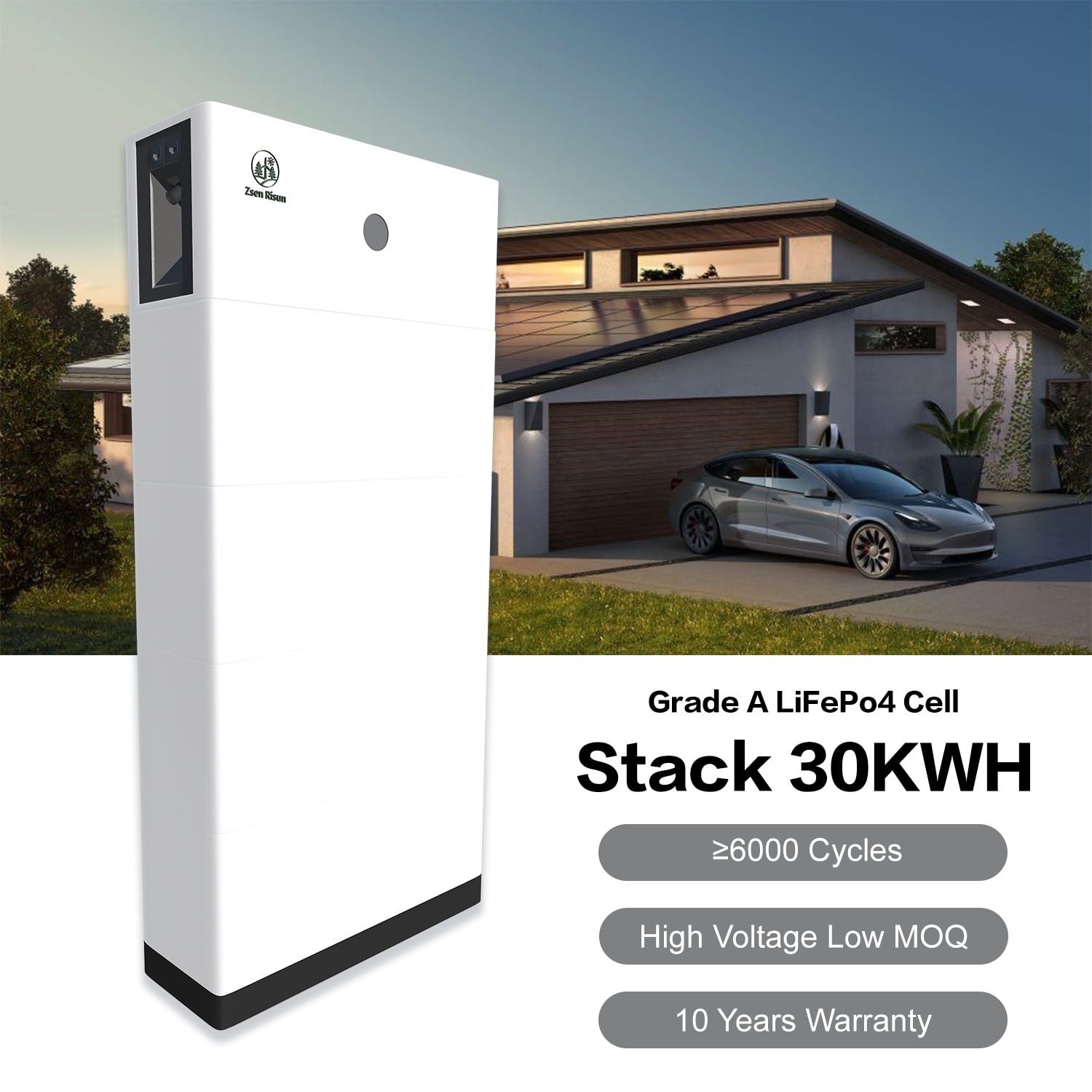
Cycle life is a core competitive advantage. According to the GB/T 36276 national standard, with capacity degradation to 80% as the standard, mainstream products achieve 3000-4000 cycles at 80% depth of discharge (DOD), while high-end products can exceed 6000 cycles in laboratory tests. In practical applications, household energy storage scenarios use a 20%-80% SOC charging and discharging range, with an annual degradation of only 2.5%, resulting in a lifespan of 12-15 years; in a 50% shallow charge and discharge mode, the number of cycles can be extended to 8000, perfectly matching the high-frequency cycling requirements of photovoltaic energy storage.
Continuous technological advancements are addressing performance shortcomings. The fourth-generation high-voltage density products have achieved large-scale mass production, with a single-cell energy density of 190 Wh/kg and a system energy density exceeding 205 Wh/kg, approaching the level of ternary batteries. Simultaneously, through optimization with new electrolytes and thermal management technologies, range reduction in -30℃ low-temperature environments is controlled within 20%, and 4C ultra-fast charging technology can achieve 80% charge in 15 minutes, solving the traditional pain points of low-temperature performance and fast charging.
Environmental and cost advantages are prominent. They do not contain scarce heavy metals such as cobalt and nickel, comply with RoHS and REACH environmental regulations, have low carbon emissions throughout their lifecycle, and can be harmlessly disassembled and recycled according to the GB/T 34015-2017 standard after decommissioning. Due to the readily available raw materials, the cost is 15%-20% lower than that of ternary lithium batteries. Furthermore, the battery management system (BMS) supports three-level fault warning and millisecond-level circuit breaker response, meeting the redundancy design requirements of large-scale energy storage power stations.
Typical applications: Thanks to its performance characteristics, it widely covers various application scenarios. In the new energy vehicle sector, products such as BYD's Blade Battery support stable vehicle operation for 600,000 kilometers; in the energy storage field, it dominates photovoltaic/wind power energy storage and grid peak shaving projects, and is also suitable for home energy storage systems; in commercial scenarios, electric buses, low-speed electric vehicles, and communication base stations—equipment with high requirements for safety and long lifespan—all use it as their core power source. The global market size maintains a compound annual growth rate of over 20%, and is expected to exceed 150 billion RMB by 2028.
Mainstream Cathode Material Preparation Process: Cathode material is the core component determining battery performance, and its preparation involves two key steps: precursor preparation and synthesis. The carbothermal reduction solid-phase method is the mainstream industrial process.
The first step involves preparing the iron phosphate precursor. Using ferrous sulfate heptahydrate as the iron source and industrial phosphoric acid as the phosphorus source, Fe²⁺ is oxidized to Fe³⁺ using hydrogen peroxide. Ammonia water is used to adjust the pH to 1.5-2.5 to precipitate iron phosphate. After plate-and-frame filtration and pure water washing to remove impurities, the material is flash-dried and calcined at 500-600°C to obtain battery-grade iron phosphate dihydrate precursor with an iron-to-phosphorus ratio of approximately 0.97:1.
The second step is the synthesis of lithium iron phosphate. Anhydrous iron phosphate, lithium carbonate (at a 105% stoichiometric ratio), and a glucose carbon source are mixed in proportion. The mixture is wet-milled to a fine slurry with a D50 of 0.2-0.6 μm. After spray drying, the material is sent to a roller kiln under nitrogen protection, using a two-stage sintering process: pre-decomposition of raw materials at 350°C for 4 hours, followed by heating to 700-800°C for 9-20 hours to complete carbothermal reduction. The carbon source reduces Fe³⁺ to Fe²⁺ and forms a conductive carbon coating layer on the particle surface. After sintering, the material undergoes air-jet milling, classification screening, and strong magnetic iron removal to finally obtain a black composite cathode material with an olivine crystal structure and a specific capacity of 155-165 mAh/g.
The liquid-phase method serves as a supplementary process, exemplified by Defang Nano's self-heating evaporation method. This process is simpler: after mixing and dissolving the raw materials into a slurry, the mixture is preheated and self-evaporated in a reaction tank to form a honeycomb-like gel precursor. After initial crushing and fluidized bed drying, the material is sintered. This method eliminates the need for separate iron phosphate precursor preparation, resulting in more uniform material mixing, but requires higher precision in temperature control. Currently, it is mainly used in the production of high-end energy storage batteries. II. Cell Assembly and Post-Processing: After the positive electrode material is prepared, it undergoes coating, rolling, and slitting to form the positive electrode sheet. This is then stacked or wound with the graphite negative electrode sheet and separator in a "positive-separator-negative" structure, and placed into an aluminum casing (for prismatic batteries) or steel casing (for cylindrical batteries) to form the cell. After injecting the carbonate-based mixed electrolyte, the cell undergoes a formation process to activate it. Constant current and constant voltage charging is used to form an SEI passivation film on the electrode surface. Finally, aging, capacity testing, and sorting are performed to eliminate products with unqualified capacity and internal resistance, ensuring cell consistency.