
The Science of Right Sizing Your Energy Storage
Right sizing a home energy storage system is a critical task that goes beyond simple estimation. Many homeowners find themselves at a crossroads when choosing battery capacity: selecting a unit that is too small leads to reliance on the grid as soon as the sun sets, while opting for an oversized system results in unnecessary capital expenditure on capacity that remains underutilized. Successful installations are built on a foundation of detailed energy consumption audits. Analyzing real-time load data, rather than relying on basic home size metrics, provides the accuracy needed for a tailored solution. Distinguishing between essential loads, such as refrigerators and security systems, and non-essential loads, like electric vehicle chargers or pool pumps, is the fundamental step in designing a system that aligns with daily energy rhythms and maximizes return on investment.
Understanding Daily Load Patterns and Consumption Habits
Technical specifications must be interpreted through the lens of individual household habits. Factors such as evening laundry schedules, high-usage peak hours, and constant air conditioning during summer months dictate the actual battery requirements. For most suburban households, the primary goal is to cover the evening peak, which typically occurs between 6 PM and 10 PM. During this window, utility rates are often at their highest and solar production has tapered off. Data indicates that a capacity range of 10 to 20 kWh often serves as the optimal balance for standard residences, allowing for the operation of core appliances without overextending the system. Strategic planning focuses on shifting dependency away from expensive peak-hour grid electricity, transforming the battery into a reliable buffer that stabilizes the home's energy profile throughout the night.
Technical Considerations for Advanced Battery Chemistry
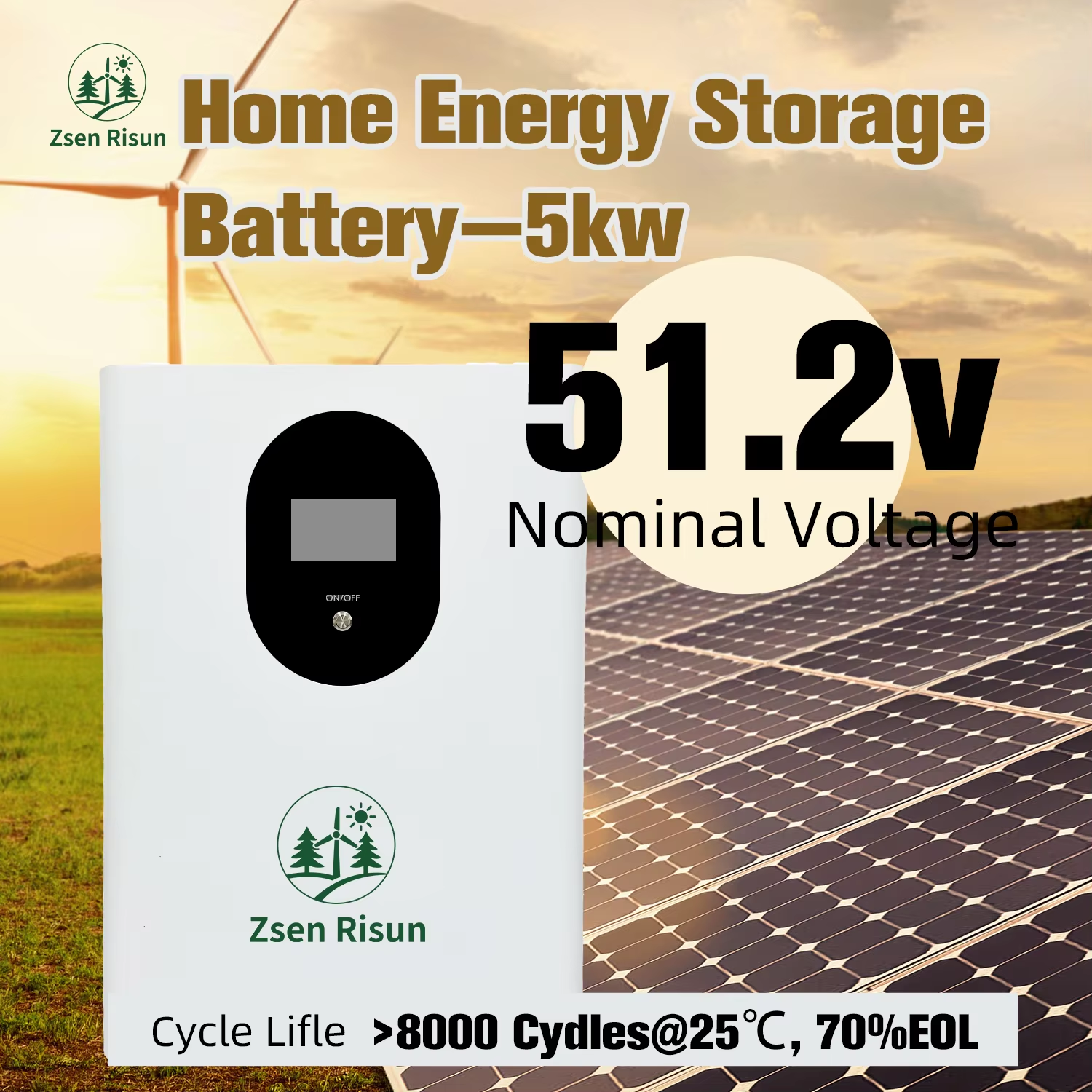
Navigating the hardware market requires a clear understanding of battery chemistry. Lithium Iron Phosphate (LFP) has emerged as the industry gold standard for residential storage, primarily due to its superior safety profile, extended cycle life, and inherent resilience to temperature fluctuations. When evaluating various battery modules, the focus must be placed on "usable capacity" rather than just total capacity. Standard modules include a safety buffer to prevent deep discharge, a feature essential for protecting long-term cell health. This is where high-level engineering, such as that practiced by Zsen Risun, becomes a differentiator. Their modules are engineered to allow for a higher depth of discharge without compromising the integrity of the cell. This precision engineering is the defining factor between a system that maintains optimal performance for over a decade and one that experiences premature degradation within five years.
Balancing Battery Capacity with Solar Generation Efficiency
A battery storage system functions most effectively when it acts as an integrated partner to the solar array, not as an isolated component. Industry best practices suggest sizing the battery to store approximately 60% to 80% of daily solar production. This creates a synchronized loop where the battery charges during peak production hours and discharges to a sustainable level by the following morning. If the battery capacity is insufficient, excess solar energy is wasted by being pushed back to the grid at low feed-in tariffs. Conversely, an oversized battery may never reach a full charge during cloudy or winter conditions, representing an inefficient allocation of resources. Achieving this balance requires sophisticated software modeling and an intelligent Power Management System (PMS) to ensure that the flow of electricity is optimized for every possible scenario.
The Hidden Value of a Reliable Supply Chain
Selecting a battery system involves evaluating the long-term reliability of the manufacturer. The renewable energy sector has seen many new entrants with aggressive marketing but fragile supply chains. When the need for replacement modules or technical support arises years after the initial installation, the longevity of the brand becomes the most important factor. Companies like Zsen Risun prioritize an integrated approach, managing the entire lifecycle from battery cell production to the development of proprietary management software. This vertical integration ensures that all components are calibrated to function in perfect harmony. This seamless synergy effectively prevents the common communication errors and compatibility issues that often plague mismatched systems. Choosing a brand with a strong manufacturing history is essentially an investment in a trouble-free energy future.
Final Considerations for Empowering Your Home
The decision to install a battery storage system is a significant step toward achieving total control over a home’s energy future. By prioritizing a rigorous calculation of loads, selecting high-performance technology, and partnering with manufacturers known for industrial stability, homeowners can create a system that provides peace of mind for years. Whether the goal is to build resilience against grid outages or to achieve consistent monthly utility savings, the process remains mathematically logical when broken down into manageable phases. This transition represents a major structural upgrade, much like modernizing the electrical wiring or roofing. Approaching the installation with careful planning and a commitment to quality components ensures that the energy system will continue to deliver performance and efficiency for decades to come.
Table of Contents
- The Science of Right Sizing Your Energy Storage
- Understanding Daily Load Patterns and Consumption Habits
- Technical Considerations for Advanced Battery Chemistry
- Balancing Battery Capacity with Solar Generation Efficiency
- The Hidden Value of a Reliable Supply Chain
- Final Considerations for Empowering Your Home