
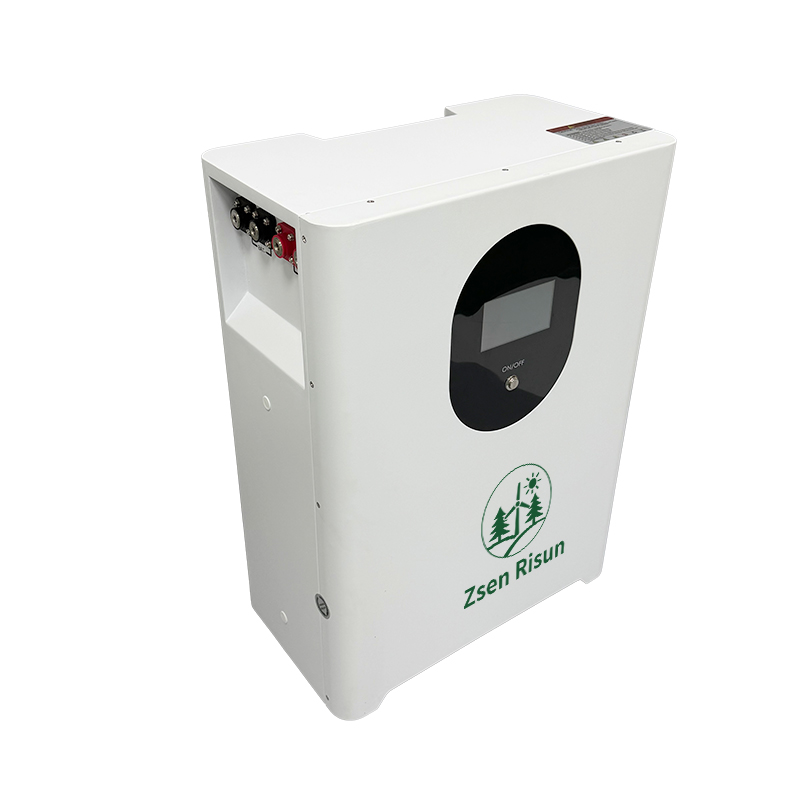
Selecting a Cell Technology and Safety Certification
When considering energy storage batteries for commercial off grid projects, safety is the number one priority. In practical project experience, many commercial off grid projects are situated in remote industrial parks or business zones with incomplete supporting infrastructure, and battery safety incidents can cause project halts and immense economic damage. Due to their reliable crystal formation and excellent resistance to thermal runaway, Lithium iron phosphate cells are the preferred batteries for most commercial off grid projects. This is supported by operational data of over a hundred off grid projects in 171 countries and regions. In addition to this, battery products should carry global authoritative certifications including UL, ISO, CE, and UN38.3. These certifications are the baseline for batteries to be in the market and are also the primary safeguard for overall system safety during operation. In previous cases, batteries that did not meet certification requirements had safety risks in their battery management and structural designs which resulted in damage to the system components in previous operational incidents.
Evaluation of Cycle Life and Energy Efficiency
The evaluation of cycle life and energy efficiency is pivotal in estimating the return on the initial investment for commercial off-grid energy storage projects. For commercial projects, the nominal cycle life of the battery should realistically reflect daily charge and discharge cycles, instead of laboratory cycles. Mainstream lithium iron phosphate battery technologies with over 6000 cycles offer basic operational functionality for commercial projects, while 8000 cycle batteries reduce the frequency of replacement and extend the profitability of the project. Energy efficiency is also a major concern. The AC side efficiency of the energy storage system with storage and PCS losses should be at least 85%. In a commercial off-grid project at an industrial park, a system with 90% energy efficiency is projected to increase the annual available energy by 15% compared to a system with 80% energy efficiency, which quite evidently reduces profitability. In this regard, energy efficiency is one of the critical factors to consider when choosing batteries, and energy efficiency test reports should be made available.
System Integration and Intelligent Management
Commercial off-grid projects have increasing demands on the stabilization of the whole energy storage system, meaning that the integration of batteries, inverters, and energy management systems is crucial. From practical experience, numerous projects have identified problems such as unstable output of power and energy under-utilization, resulting from the batter- inverter communication and control logic mismatch. Thus, the battery system should have an integrated intelligent EMS management system that provides features such as real-time battery status monitoring, automated adaptive charge and discharge strategies, and intelligent response to emergency supply requirements. In a commercial off-grid shopping mall project, for instance, the EMS system is designed to adjust the battery discharge power depending on the real-time load of the mall. This is to avoid battery over-discharging and ensure uninterrupted power supply to crucial components such as elevators and air conditioners. Thus, the ideal merger between the battery and the whole system will enhance the project’s operational stability and energy utilization.
Adaptability to Complicated Working Environments
When considering commercial off grid projects, the working environment is commonly complex and constantly changing. The ability of batteries to adapt to these conditions is pivotal to the reliability and longevity of the project. The first thing to note is that the battery and its components should provide functionality for a broad range of environmental and operational conditions. An example is a liquid cooled energy storage unit, where battery operation even at environmental temperatures of 50°C can be controlled. Furthermore, batteries should be able to offer reasonable charge and discharge rate. This is especially important for most commercial off grid projects that require 0.5C to 1C. This range is ideal as it maximizes lifespan of the batteries while providing balance to discharge and charge rates. Lastly, for off grid projects that experience intermittent and unstable operation of photovoltaic energy generation, the battery should also be able to accept and store energy from fluctuating currents. This functionality ensures that the battery can provide sustained electric energy to the project.
Total Life Cycle Cost and After Sales Support
Considering the purchase price at the outset is a misguided approach when energy storage batteries are selected for commercial off grid projects. It has been noticed that some low-priced batteries show a marked deterioration in capacity within the first one or two years, and the cost of replacement batteries is far greater than any initial savings. A quality battery will come with an industry standard warranty of at least six years, and many batteries on the market are beginning to come with a warranty for up to a decade. It is equally important to consider an manufacturer’s warranty in conjunction with it's after sales support - to include how quickly an order is completed, how far the replacement parts service is, and how accessible repair specialists are. With commercial off grid projects, batteries are a cost center, and therefore the manufacturer with the highest warranty service has the least detrimental effect on the project.
Scalability and Future Expansion of the Project
Considering that commercial projects are perpetually undeveloping and expanding, the energy storage battery system's scalability must be taken into account when choosing products. Flexible capacity expansion, in accordance with the project’s power requirements, can be achieved without system replacement or increased cost of expansion with battery systems that have stackable and rack mounted designs. In a commercial off-grid industrial park, the initial energy storage capacity as in operational energy. However, it With the park’s expansion, the battery capacity increased through stackable design to 200kWh, resulted in savings of nearly 30% compared to a new system, and the construction time. Furthermore, the battery system should be integrated with most of the mainstream available photovoltaic and inverter products, to ensure other options available for the project’s future expansion and modifications. Zsen Risun holds 28 patents and offers a complete product array, including stackable high voltage batteries and integrated solar storage systems. This company has over a decade of specialization in the storage energy sector.With global certification, extended life cycles, and flexible scalability, the products offer the best value in one-sop energy storage solutions for all commercial off-grid applications in the various countries and regions.