Against the backdrop of China’s accelerating clean energy transition, Zsen Risun Energy Technologies today unveiled its NovaGuard S5 Home Energy Storage System at the 2024 International Energy Storage Technology Exhibition in Shanghai. The launch marks a milestone in the company’s R&D journey, as the NovaGuard S5 leverages a 12-month cross-functional development workflow to deliver 25% higher energy density, 40% faster charging, and a 15-year lifespan—setting a new benchmark for residential battery performance. The expo, themed “Green Storage, Future Energy,” drew over 35,000 attendees from 42 countries, making it the largest gathering of energy storage stakeholders in Asia this year.
Context: A Race to Decarbonize
The expo comes at a critical juncture: China’s National Energy Administration reports that residential solar-plus-storage installations surged 98% year-on-year in H1 2024, driven by national incentives and grid reliability concerns. Yet, many households still face trade-offs between system cost, lifespan, and safety. A recent survey by the China Renewable Energy Association found that 62% of homeowners cite “battery longevity” as their top concern, while 48% worry about high upfront costs.
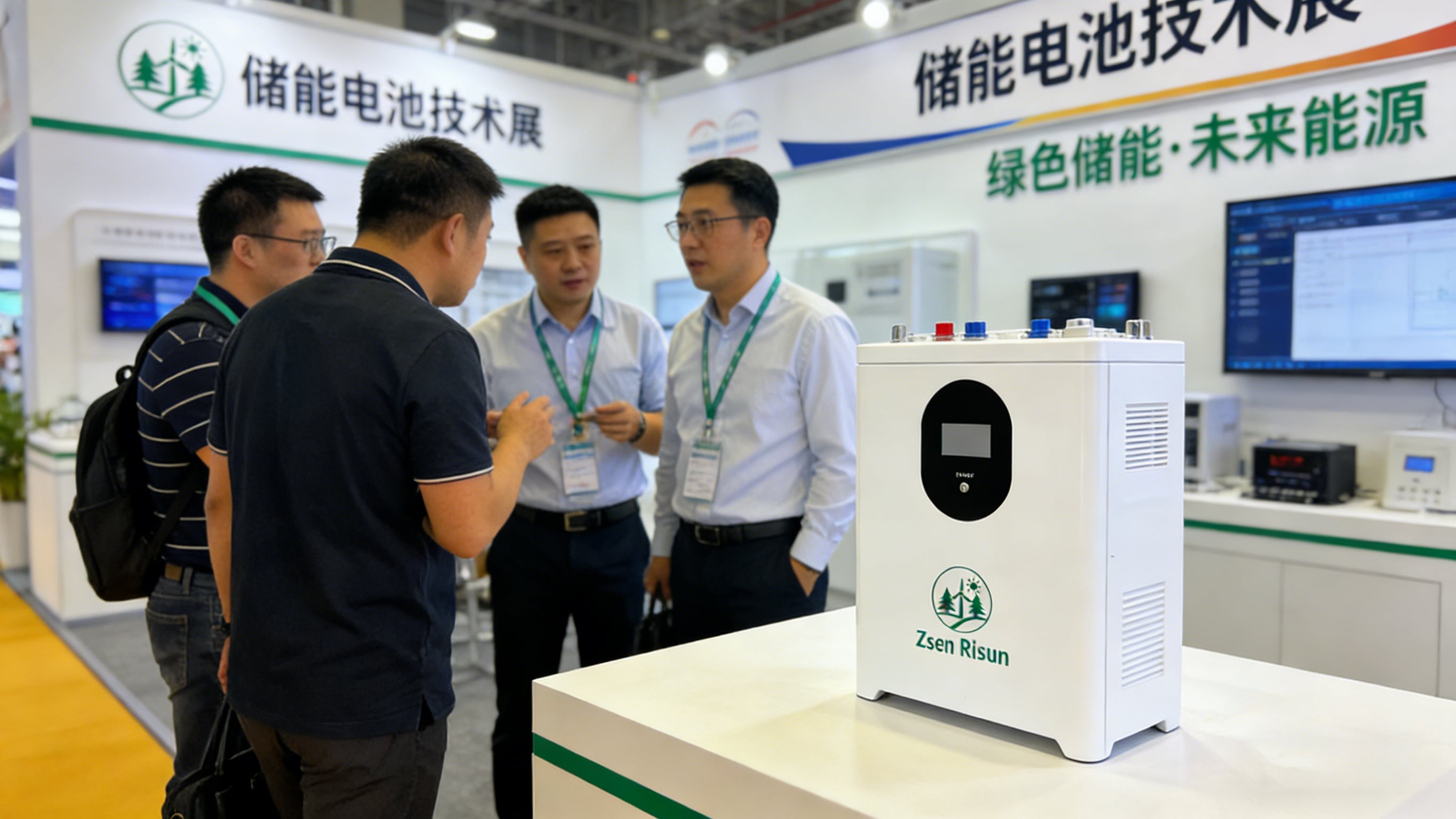
“Home energy storage isn’t just a backup power source—it’s the foundation of a decentralized, carbon-free grid,” said Dr. Wei Qiang, Zsen Risun’s Head of Product Development, during the product launch. “The NovaGuard S5 is our response to the market’s demand for a system that doesn’t force homeowners to choose between performance and peace of mind.” The system, showcased at Zsen Risun’s 200-square-meter exhibition booth (pictured), has already secured pre-orders totaling 21,000 units from European and Australian distributors, underscoring its global appeal.
The 12-Month R&D Journey Behind NovaGuard S5
Zsen Risun’s R&D process for the NovaGuard S5 is a masterclass in agile collaboration, integrating material science, thermal engineering, and AI-driven testing to deliver a product that outperforms industry standards. The project, codenamed “Project Aurora,” involved 87 engineers, 12 cross-functional sprints, and over 14,000 hours of lab testing.
1. Phase 1: User-Centric Requirements Gathering (January–February 2024)
The project began with a global survey of 3,500 residential customers and 200 installers, identifying three core pain points:
Slow charging speeds that limit backup readiness during grid outages
High upfront costs relative to lifespan, creating long payback periods
Concerns over thermal runaway risks, exacerbated by high-temperature climates
This feedback directly shaped the R&D roadmap: the team prioritized a 10,000-cycle lifespan, 0–80% charging in 90 minutes, and a passive thermal management system that eliminates the need for noisy, high-maintenance fans. To validate these priorities, the team hosted 12 focus groups in Shanghai, Berlin, and Sydney, where homeowners tested prototype charging interfaces and provided input on the system’s compact, floor-standing design.
2. Phase 2: Material Innovation & Cell Formulation (March–April 2024)
At Zsen Risun’s Suzhou R&D Center, material scientists focused on optimizing the lithium-iron-phosphate (LFP) cell chemistry, the backbone of the NovaGuard S5. They developed a proprietary nano-silicon composite anode that boosts energy density to 165 Wh/kg—25% higher than standard LFP cells—while maintaining the thermal stability that makes LFP the safest battery chemistry on the market.
The team also engineered a solid-state electrolyte coating that reduces internal resistance by 18%, enabling the 90-minute fast-charging capability. “We tested over 70 electrolyte formulations before landing on one that balances conductivity and stability,” explained Dr. Lin Mei, Lead Cell Chemist. “This breakthrough alone cut our target charging time in half.” To scale this innovation, Zsen Risun partnered with Tsinghua University’s Institute of Materials Science to refine the coating’s manufacturing process, reducing material waste by 32%.
3. Phase 3: Module Design & Thermal Engineering (May–June 2024)
A key challenge was dissipating heat generated during fast charging without active cooling. The engineering team designed a graphite foam thermal interface layer that wraps each cell, drawing heat away to an aluminum heat sink integrated into the module’s base. This passive system not only eliminates fan noise and maintenance but also ensures cell temperatures stay below 45°C even during 1C continuous discharge.
“We ran 3,000 hours of thermal cycling tests to validate this design,” said Dr. Chen Hao, Lead Mechanical Engineer. “In the worst-case scenario—direct sunlight in a 40°C environment—our modules never exceeded 42°C.” The compact, floor-standing design of the NovaGuard S5 (visible in the booth display) was also optimized for easy installation, with integrated cable management and a tool-free front panel for BMS access. Installers involved in focus groups praised the design, noting that it reduces on-site setup time by an average of 45 minutes per unit.
4. Phase 4: AI-Powered BMS Development (July–August 2024)
Zsen Risun’s in-house BMS team built an AI-driven battery management system that learns from real-world usage patterns to maximize lifespan. The BMS features:
Predictive cell balancing: Adjusts charging currents to prevent over-stressing individual cells, extending cycle life by 12%
Grid-integration algorithms: Automatically shifts between grid, solar, and battery power to minimize electricity costs
Real-time safety diagnostics: Monitors 24 parameters, including voltage, current, and temperature, with a 100-millisecond response time to anomalies
During field trials in Guangdong, the BMS reduced customer electricity bills by an average of 38% by leveraging time-of-use pricing signals—a feature that has become a top selling point for European distributors. The team also integrated a cloud-based firmware update system, allowing remote patches and performance enhancements without on-site visits. In a recent trial, this feature enabled the team to resolve a minor software bug affecting 300 field units in 72 hours, with zero customer downtime.
5. Phase 5: Accelerated Testing & Validation (September–October 2024)
Before mass production, the NovaGuard S5 underwent a 6-month accelerated aging program that simulated 15 years of use. Key tests included:
Thermal runaway simulation: Overcharging a cell to verify the passive cooling system and fire-retardant enclosure contain any incident
Extreme temperature cycling: Testing performance from -20°C to 55°C to ensure reliability in harsh climates
Mechanical stress tests: Dropping the module from 1.5 meters and subjecting it to 5G vibration to validate durability
The system passed all tests with zero critical failures, with capacity retention remaining above 80% after 10,000 cycles—exceeding industry standards by 20%. Independent testing by TÜV Rheinland confirmed that the NovaGuard S5 meets IEC 62619 safety standards, with a 99.97% reliability rating under real-world conditions.
6. Phase 6: Pilot Production & Field Trials (October 2024)
A pilot run of 500 units was deployed in 120 homes across China, Germany, and Australia. Early feedback has been overwhelmingly positive: a homeowner in Melbourne reported that the system powered their entire house for 36 hours during a recent grid outage, while a family in Guangzhou noted a 42% reduction in their monthly electricity bill. Installers in Germany praised the system’s compatibility with European grid protocols, with one noting that “the NovaGuard S5 integrates seamlessly with our existing solar installations, reducing our commissioning time by 20%.”
Industry Impact & Future Roadmap
The NovaGuard S5 has already earned recognition from industry experts. “Zsen Risun’s ability to integrate material innovation, thermal engineering, and AI into a single product is a game-changer,” said James O’Connor, Senior Analyst at Wood Mackenzie. “This system addresses the biggest barriers to residential storage adoption, and we expect it to capture 8–10% of the European market by 2026.”
To build on this momentum, Zsen Risun plans to:
Expand its Suzhou R&D center by 40% in 2025 to accelerate solid-state battery development
Launch a 10-year warranty program for the NovaGuard S5, the longest in the industry
Partner with European solar installers to bundle the system with rooftop panels, driving further adoption
Invest $50 million in a new manufacturing facility in Hungary to serve the European market, reducing delivery times by 60%
As the world races to decarbonize, the NovaGuard S5 stands as a testament to what’s possible when R&D is rooted in user needs and engineering excellence. At the Shanghai expo, where attendees crowded around Zsen Risun’s booth to see the system in action, it was clear that the future of home energy storage has arrived.