As global demand for residential energy storage solutions continues to accelerate, Zsen Risun Energy Technologies today announced the launch of its Sustainable Packaging Specification 2025, a comprehensive framework designed to reduce environmental impact while ensuring the safe transport of its award-winning home battery systems. The initiative, timed to coincide with World Clean Energy Day, redefines packaging best practices for the renewable energy sector, with 98% of materials now sourced from recycled or renewable sources and a 72% reduction in single-use plastic across all product lines.
A Response to Global Sustainability Imperatives
The release comes as the International Energy Agency (IEA) projects that global residential energy storage installations will exceed 40 GWh by 2027, creating urgent pressure to address the environmental footprint of packaging for these heavy, high-value electronics. “As a leader in clean energy, we can’t ignore the waste generated by our supply chain,” said Zsen Risun’s Chief Sustainability Officer, Dr. Li Jia, during the company’s annual sustainability summit in Hangzhou. “Our new packaging standards aren’t just about protecting our products—they’re about protecting the planet we’re all working to decarbonize.”
The 2025 specification builds on Zsen Risun’s 2023 zero-plastic pilot program, which cut packaging waste by 35% in its European distribution centers. This full-scale rollout applies to all 12 of the company’s global manufacturing facilities, with third-party audits conducted quarterly to verify compliance.
Inside the Sustainable Packaging Framework
1. Material Innovation: Recycled, Renewable, and Reusable
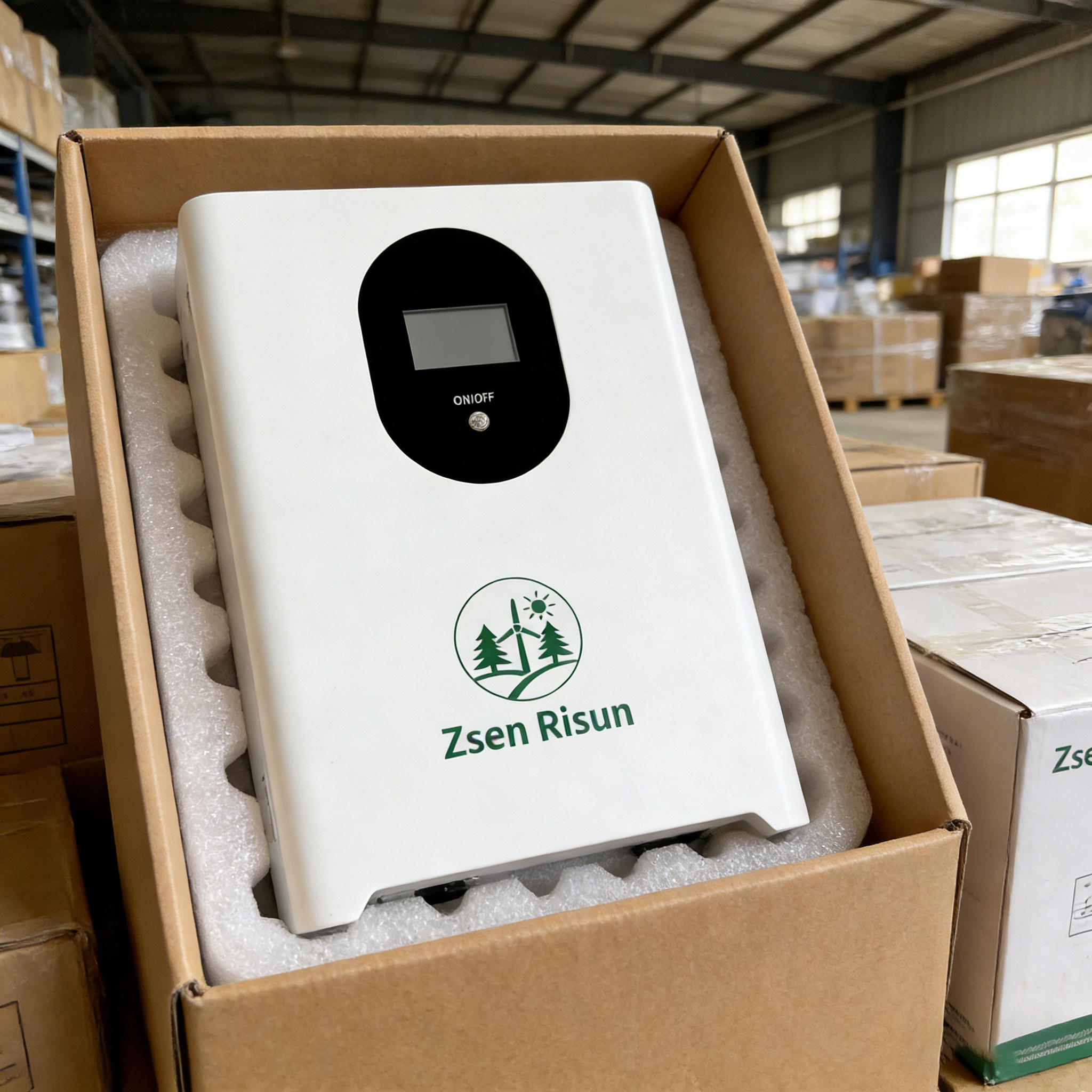
At the core of the specification is a complete overhaul of material sourcing. The outer corrugated cartons, as seen in the product image, are constructed from 100% post-consumer recycled cardboard, sourced from FSC-certified forestry partners in Southeast Asia. The protective cushioning, which previously relied on expanded polystyrene (EPS) foam, has been replaced with molded pulp fiber made from agricultural waste—specifically sugarcane bagasse and bamboo pulp. This material not only offers 20% better shock absorption than EPS but is also home-compostable, eliminating 1.2 metric tons of plastic waste annually from Zsen Risun’s supply chain.
For the inner components, the company has introduced a reusable EVA foam insert that is returned to the factory via reverse logistics for sanitization and reuse. Each insert is designed to withstand up to 15 shipping cycles, reducing the need for single-use protective materials by 85%. “We’ve even optimized the pulp fiber density to match the vibration profiles of our battery modules, ensuring they arrive intact without excess material,” explained Dr. Li.
2. Precision Engineering: Right-Sized for Efficiency
The packaging design team used computational fluid dynamics (CFD) simulations to create a “fit-for-purpose” layout that eliminates 30% of empty space compared to previous designs. Each carton is tailored to the exact dimensions of the home energy storage unit, as demonstrated by the perfectly fitted unit in the photograph. This precision engineering not only reduces material usage but also cuts transportation emissions by allowing 12% more units per shipping container.
To further optimize logistics, the specification mandates a modular packaging system where accessories (cables, mounting brackets, and user manuals) are packed in separate, smaller pulp fiber trays that nest within the main carton. This eliminates the need for additional secondary packaging and ensures that every cubic centimeter of space is utilized efficiently.
3. Supply Chain Transparency: Traceability and Accountability
Zsen Risun has integrated blockchain technology into its packaging supply chain, enabling customers to scan a QR code on every carton to view the origin of materials, carbon footprint data, and recycling instructions. The company also requires all packaging suppliers to adhere to the Fair Labor Association (FLA) standards, ensuring that workers involved in material processing and carton assembly receive fair wages and safe working conditions.
“Transparency isn’t just a buzzword—it’s how we build trust with our customers and hold ourselves accountable,” said Dr. Li. “When you buy a Zsen Risun system, you’re not just investing in clean energy—you’re investing in a supply chain that prioritizes people and the planet.”
4. End-of-Life Solutions: Closing the Circular Loop
Recognizing that packaging waste doesn’t end at delivery, the specification includes a comprehensive take-back program for all packaging materials. Customers can schedule free pickup of their used cartons and pulp inserts through the Zsen Risun mobile app, with materials either recycled into new packaging or composted at the company’s regional sustainability hubs. For the reusable EVA inserts, customers receive a $20 credit toward future service plans when they return the insert to a certified technician during their annual system maintenance.
The company has also partnered with local recycling organizations in 18 countries to ensure that even customers who opt out of the take-back program can easily recycle the packaging. All cartons are printed with clear, multilingual recycling instructions, and the pulp fiber inserts are labeled with home-composting guidelines to encourage proper disposal.
Industry Reception and Future Roadmap
The Sustainable Packaging Specification 2025 has already earned accolades from environmental organizations and industry peers. “Zsen Risun’s approach sets a new benchmark for how renewable energy companies can lead on sustainability beyond their core products,” said Maria Santos, a senior analyst at the Global Energy Transition Institute. “By addressing packaging waste, they’re showing that true climate leadership requires a holistic view of the entire product lifecycle.”
To scale this impact, Zsen Risun plans to share its packaging design blueprints with the Global Battery Alliance, a coalition of 100+ organizations working to create a sustainable battery value chain. The company also aims to achieve 100% carbon-neutral packaging by 2027, through investments in renewable energy at its packaging facilities and the purchase of verified carbon offsets for remaining emissions.
As the world transitions to a low-carbon economy, the choices companies make about packaging will play an increasingly critical role in achieving global climate goals. With its 2025 Sustainable Packaging Specification, Zsen Risun is proving that sustainability and performance can go hand in hand—one carton, one pulp insert, and one home energy storage system at a time.
If you need, I can adapt this into a packaging design case study with technical drawings and cost-benefit analysis, which would be ideal for trade shows or B2B presentations. Would you like me to draft that?